
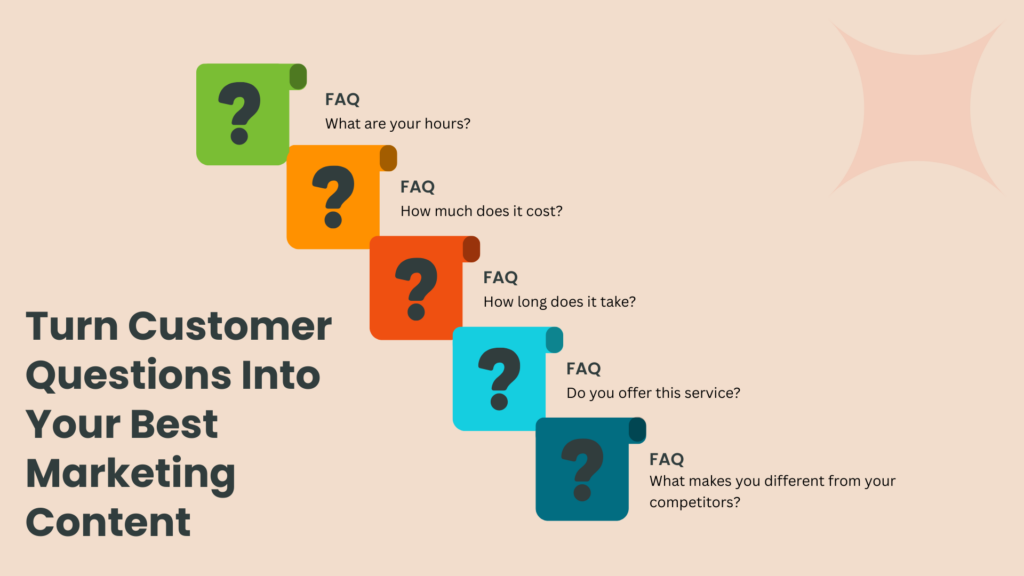
Every business owner has heard the same questions more than once.
“What are your hours?”
“How much does it cost?”
“How long does it take?”
“Do you offer this service?”
“What makes you different from your competitors?”
For many businesses, answering these questions becomes part of the daily routine. Whether they arrive through phone calls, emails, social media messages, or conversations with customers, these questions are often viewed as simple tasks to check off the list.
But what if those same questions could become one of your most valuable marketing tools?
The truth is, the questions your customers ask every day are some of the best indicators of the information they’re looking for before making a purchasing decision. Instead of answering those questions one customer at a time, businesses can use them to create valuable content that educates future customers while building trust and credibility.
Every question represents an opportunity.
One of the biggest challenges businesses face is deciding what to post on social media or what to write about in a blog. Many owners believe they have to come up with completely new ideas every week, when in reality, their customers are already providing them with an endless supply of relevant content.
Think about the conversations you have most often.
If one customer asks a question, there’s a good chance dozens of other people have the same question but simply haven’t asked it yet. By answering those questions publicly through your marketing, you’re helping future customers while positioning your business as a helpful and knowledgeable resource.
This approach shifts your marketing from promotional to educational.
Today’s customers don’t just want advertisements. They want information that helps them make informed decisions. Businesses that consistently educate their audience often build stronger relationships than those that focus only on selling.
Educational marketing demonstrates expertise without feeling like a sales pitch.
When a potential customer finds a blog article, social media post, or video that answers a question they’ve been wondering about, they begin associating your business with helpfulness and credibility. Even if they don’t become a customer immediately, they’ll remember where they found the answer.
Over time, those positive interactions build trust.
Customer questions can also improve your website.
Many businesses have a Frequently Asked Questions page, but often it’s little more than a list of short answers. Instead of limiting yourself to brief responses, consider expanding common questions into full blog articles or detailed service pages.
For example, a landscaping company might answer “How often should I fertilize my lawn?” in a comprehensive blog post.
A marketing agency might explain “Why does my business need a website?” in an educational article.
A contractor could write about “How long does a kitchen remodel typically take?”
Each article becomes a valuable resource that not only helps customers but also improves search engine visibility.
Search engines are designed to connect users with helpful information. When your website consistently answers the questions people are searching for, it becomes more likely to appear in search results.
This means your customer questions aren’t just helping existing customers—they’re helping new customers discover your business online.
The same principle applies to social media.
Instead of wondering what to post each week, turn frequently asked questions into short educational posts. One question can easily become a graphic, a video, a carousel post, or even a quick tip.
For example, if customers frequently ask about your process, create a simple post walking them through the steps.
If people often ask how long a project takes, explain the typical timeline.
If pricing is a common question, discuss the factors that influence cost without necessarily listing exact numbers.
These types of posts provide value while reducing repetitive inquiries.
Customer questions also make excellent video content.
Video continues to be one of the fastest-growing forms of online communication because it feels personal and easy to consume.
Imagine recording a one-minute video answering one of your most frequently asked questions. Not only does this save time in the future, but it also allows potential customers to see your personality and hear directly from you.
That personal connection often makes your business feel more approachable.
Email marketing can benefit from customer questions as well.
Many businesses struggle with what to include in newsletters. Instead of filling emails with promotions, dedicate a section to answering a common customer question each month.
Your subscribers receive valuable information while staying connected to your business in a meaningful way.
This approach keeps your emails informative rather than overly promotional.
Another benefit of question-based content is that it naturally addresses customer concerns before they become obstacles.
Many people hesitate to contact a business because they worry their questions may seem obvious or unimportant. By proactively providing answers, you remove uncertainty and make customers feel more comfortable taking the next step.
This can improve both customer confidence and conversion rates.
Question-based content also supports consistency.
One of the biggest obstacles business owners face is maintaining a regular marketing schedule. Having a running list of customer questions gives you a steady supply of ideas that are directly relevant to your audience.
Instead of staring at a blank screen wondering what to write, you already know exactly what your customers want to learn.
That makes creating content faster, easier, and far more effective.
It’s also important to remember that questions evolve over time.
As your business grows, introduces new services, or enters new markets, your customers’ questions will change as well. Paying attention to those conversations helps ensure your marketing remains current and relevant.
Your front-line employees can become valuable contributors to this process.
Customer service representatives, sales teams, and receptionists often hear the same questions repeatedly. Encourage them to keep track of common inquiries and share those ideas with whoever manages your marketing.
Some of your best content ideas may come directly from the conversations happening in your office every day.
The businesses that consistently provide helpful information often become trusted resources within their industries.
Customers appreciate companies that educate rather than simply advertise. They remember businesses that answer questions honestly and provide useful guidance, even before a purchase is made.
That trust becomes a powerful competitive advantage.
Eventually, your marketing begins working for you around the clock.
Instead of answering the same questions individually dozens of times, your website, blogs, social media, and videos become a library of helpful information that serves customers whenever they need it.
Potential customers can find answers at any time of day, even outside normal business hours.
This not only improves the customer experience but also saves valuable time for your team.
The best marketing doesn’t always start with a creative brainstorming session.
Sometimes it starts with listening.
Every phone call, email, comment, and conversation provides insight into what your audience wants to know. By paying attention to those questions and turning them into valuable content, you’re creating marketing that is relevant, helpful, and genuinely useful.
Your customers are already telling you what they want to learn.
All you have to do is start answering them in a way that reaches everyone.
When you transform everyday questions into blogs, social media posts, videos, and website content, you’re doing more than creating marketing—you’re building trust, demonstrating expertise, and making it easier for future customers to choose your business.
